
Planning a fitted wardrobe that actually fits your life
Measure, list what you own, then decide on doors. A simple order of decisions that avoids the most common regrets.
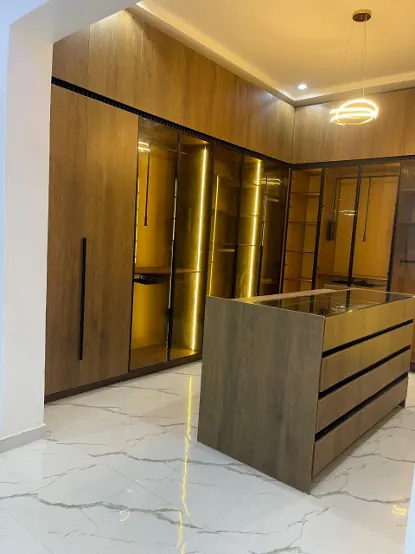
Most wardrobe regrets come from deciding things in the wrong order. People pick door styles first and discover later that there is nowhere to hang long dresses or store suitcases. Work through the decisions below in order and the design almost draws itself.
1. Measure the wall, then measure again
Measure the width at the floor, the middle and the ceiling, because walls are rarely straight. Note sockets, switches, windows and the swing of the room door. A fitted wardrobe can run all the way to the ceiling, which adds storage for things you use rarely.
2. List what you own
Count roughly how much of each type of clothing you have:
- Long hanging: dresses, agbada, coats
- Short hanging: shirts, blouses, jackets
- Folded: T-shirts, jeans, native fabrics
- Shoes and bags
- Bulky items: suitcases, duvets
This list decides how many hanging rails, shelves and drawers you need.
3. Choose the doors
- Hinged doors let you see everything at once and suit wider rooms.
- Sliding doors save space in tighter bedrooms. Mirrored sliders make a small room feel larger.
- Open or glass-front sections look stunning in walk-in closets, but they need to be kept tidy.
4. Add light and finishing touches
LED strips that switch on when doors open make a big difference in a dark corner. A built-in dressing table or a pull-out mirror can save floor space elsewhere in the room.
5. Think about the climate
Use moisture-resistant boards, leave a little ventilation and avoid pressing a wardrobe hard against an outside wall that gets damp.
Ready to plan yours? Send us your measurements or browse recent wardrobes for ideas.